people video thumbnail

Experimenting to find the pieces of growth

Every company talks about the importance of data for its growth. However, it is rare for companies to have a dedicated team solely focused on this imperative goal. Lee Min-sun, who has been involved in various tasks in the IT industry, from service marketing to business planning, chose to join NAVER WEBTOON's Growth team for her next step, and the reason lies precisely in this point. She was sure that her own growth would be possible if she were part of a company like NAVER WEBTOON, which is equipped with a separate growth team while currently experiencing an explosive growth trend.
With 13 years of experience, she finds meaning in her work by defining it herself. "I think our team’s job is to gather small pieces. It's about collecting repetitive daily experiments and executions to establish the foundation for service growth." Through agile execution skills and persistent determination, experiments to find the pieces of growth are still ongoing. Special efforts are always required to achieve the most crucial goals.

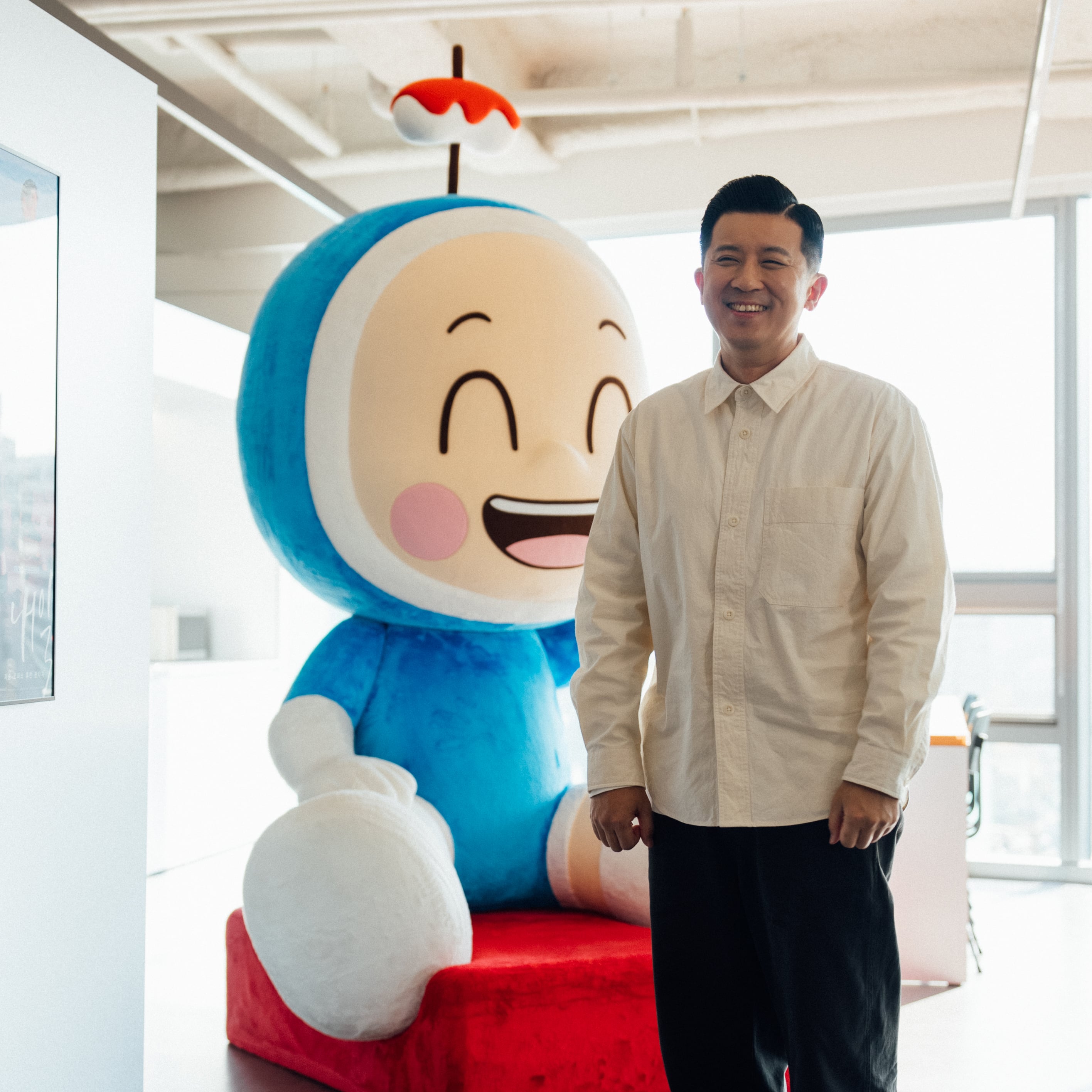
이민선님 이미지1
Tell us about the work you are doing at NAVER WEBTOON.

I’m Lee Min-sun from the KR Growth team of NAVER WEBTOON. Our team is responsible for the growth of the Korean webtoon service. We analyze daily service indicators and user data to identify key indicators directly linked to the service's growth and we also establish hypotheses that could address problems and execute them.

Tell us about your career in the IT industry.

This year marks my 13th year in the IT industry. I started my career at Kakao, where I was responsible for messenger and mobility service marketing. Then, I moved to LINE, where I was involved in blockchain business planning. And now, I work for NAVER WEBTOON. I want to talk about a personal change that I went through. When I was a junior, I felt a great sense of accomplishment when my work was visually displayed. I found great joy in seeing promotional pages that I planned or theater advertisements that I participated in. However, as I gained more experience, I felt a sense of achievement in different areas. I became curious about where the services I was responsible for stood in terms of growth, and I found it more intriguing when my contributions were reflected in numbers. That's why I joined LINE's business team and started working on establishing direct actions to increase KPI indicators.

Tell us more about your team.

I have been working in NAVER WEBTOON’s Growth team for about two and a half years. Our team's role extends beyond a typical planning or operations team. We conduct strategic planning to establish the basis to determine the direction of the service's business. Additionally, we handle tasks related to data, such as extracting and processing vast user indicators on a daily basis. Furthermore, we are also in charge of tasks related to service operation including banners and promotions that are displayed in the app. It’s a team where I can take part in all the things I enjoy.
As a result, the career backgrounds of our team members are very diverse. For instance, I have a background in service marketing while others have experience in managing KPI indicators in business teams. We also have team members who have worked with customer data in card companies or financial institutions. It's great to have a team with such a variety of career experiences, as it inspires and motivates each other even more.

“There are deep contemplations about how to score the abstract value of "fun".
As the Growth team of NAVER WEBTOON, this is a point that we in particular, put a lot of thought into.”

What data do you usually look into?

There are deep contemplations about how to score the abstract value of "fun" in contents. As the Growth team of NAVER WEBTOON, this is a point that we in particular, put a lot of thought into.
Currently, there are nearly 600 works being serialized on NAVER WEBTOON across different days of the week. Among this abundance of content, it becomes important to predict which works will receive a positive response in advance. To do so, we use leading indicators to identify potentially successful works and ensure the sustained popularity of top-ranked works.

To determine what would be fun, we at times score data such as early reader retention or preview purchase rates for new works. When examining whether the fun experience is being maintained, we also look at the trend of users who continue to follow the weekly series and those who drop off, especially for popular works in the top rankings.

Tell us about what work you do in the execution stage.

Based on the insights obtained from such data analysis, we design actions within the webtoon app to encourage readership. For example, for works that signal positive indicators of early interest but lack new inflow, we can display targeted banners recommending the work to users who are likely to enjoy it. We also conduct read events where users are rewarded with cookies for reading just the first episode. This action helps because once this work is discovered and users are encouraged to start reading, there is a certain level of validation that the subsequent indicators will be positive. It is great to see the popularity ranking escalate and maintain as a result of these actions. Additionally, when we come across reader comments like, "Why did I only discover this webtoon now? I baked all remaining cookies to see the previews of all episodes,” it brings us a great sense of accomplishment.

What tasks are you mainly focusing on these days?

I’m currently involved in analyzing user reading patterns. This entails examining how users consume webtoons, such as whether they follow the works on a weekly basis, read them on designated release days, or read up to the latest episode. While users may consistently read webtoons, their patterns such as reading cycles, when they read, and how far they read can continually change. Due to the large amount of data and the need for long-term trend analysis, this task is often referred to as a "research project" within the team.
It's easy to think that a service with a large user base is doing fine because it already has a significant number of users and is continuing to grow. However, it is important to recognize whether users are reading webtoons less consistently and whether this is beneficial or detrimental to the service in the long run. Ultimately, defining the reading patterns of users who consume more work, make more purchases, and stay engaged for longer in our service, and guiding them in the direction we desire, are the tasks of the Growth team.

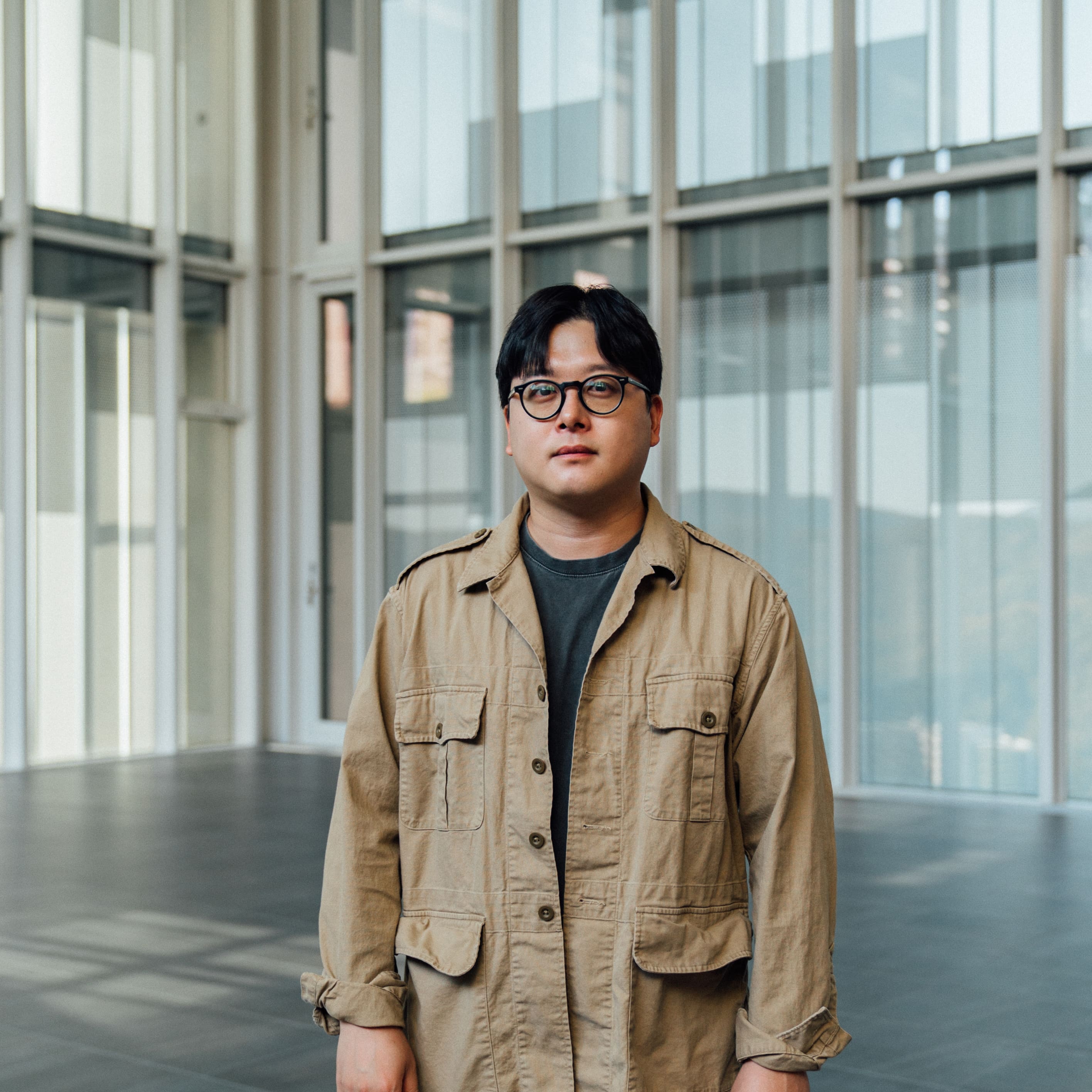
이민선님 이미지2

“I make an effort to break down the indicators as much as possible.
When it becomes too frustrating and we can't find an answer, we even go as far as searching to see if there was a soccer match on that day.”

What do you find most challenging when it comes to work?

There are many times when it becomes challenging to figure out the causes through indicators. This is because numerous internal and external factors can influence service indicators. Therefore, I make an effort to break down the indicators as much as possible. For instance, if there is a significant drop in webtoon readership on a particular day, I examine whether it is due to a decrease in existing users or a decline in new inflow. I analyze various user groups based on factors such as gender, number of webtoons read, payment amounts, and reading frequency to understand which user group's departure contributed to the overall decline in the indicator. If there is an increase in departures, I also isolate those users to examine the webtoons they were reading before leaving and the ones they had made payments for. Many times, the cause is not evident from internal indicators. When it becomes too frustrating, not knowing the reason even after spending the whole day searching for it, our team comes together, and we consider external factors such as academic schedules, weather conditions, and we even go as far as searching to see if there was a soccer match on that day.

What does it mean to be good at your job?

I believe that being good at work means providing solutions. If there is someone who identifies problems, another who goes further to analyze their root causes, and someone else who proposes actionable plans that may not be the definitive answer, I consider the last person to be the most competent one. In order to present actionable plans, one must understand the essence of the problem and identify which aspect holds the most crucial key to the solution.
In terms of attitude, it’s someone who can “adjust the level of expectation”. It's about sharing and aligning my expected level with my colleagues, communicating at what point and to what extent I can deliver my output. We cannot accomplish everything alone. Being able to define and share what I can contribute and becoming someone whose colleagues can predict "what level of output this person will deliver and when" are important. I consider someone who can flexibly adapt these expectations to be highly skilled in their job.

What is a topic you’re currently seeking an answer for?

Ultimately, I think it boils down to competing for the user’s leisure time. If a person with the capacity to consume ten pieces of content is currently consuming the ninth piece, we think deeply about how webtoons can become the tenth piece. In today’s landscape, there are countless interchangeable content options available. We are constantly contemplating how users’ consumption patterns during their spare time or schedules change and striving to understand those patterns that cannot be discerned solely through internal indicators of NAVER WEBTOON. Within this larger context, we are always pondering about what actions we should take.

Tell us about your thoughts regarding the meaning of work done by the Growth team.

In reality, Korean webtoon is already a highly mature service. The user volume is very significant. As a result, it is challenging to make significant movements in service indicators through the actions we take. Since our team is responsible for the growth of a mature service, it is difficult to determine the level of contribution our team is making in terms of growth.
I believe our team works on gathering small pieces together. It involves defining the most crucial indicators for goal achievement and iterating on hypotheses and executions to increase those indicators. Even if the actions we deemed necessary did not result in a significant increase in overall service indicators, I think that these actions in small areas accumulate and eventually contribute to laying the foundation for service growth.
Therefore, it is important to effectively archive, share, and incorporate the achievements to our products while continuously proving what our team is doing. We constantly strive to find meaning in the work we do.

“My driving force at work comes from the belief I have in myself, which is built upon both big and small accomplishments”

In your case Min-Sun, what motivates you to do better?

When it comes to work, I don't think motivation can be provided by someone else. It's something I have to find within myself. My driving force at work comes from the belief I have in myself, which is built upon both big and small accomplishments. It's the successful experiences of seeing my actions manifest in indicator outcomes, or when the hypotheses I formulated align with user behavior patterns or data. Through these experiences, I validate myself and gradually develop confidence, which ultimately serves as a motivation that drives me to work.
To be frank, I often experience moments of anxiety as well. “Is this the right thing to do?” “Will my approach bring desired results?” However, even in the face of anxiety, I tell myself that I am the person who has devoted the most thought to this problem and extensively examined the data. This mindset allows me to make decisions and execute swiftly. When those decisions prove to be effective, they strengthen my self-belief on a deeper level.

If you were given a year-long vacation, what would you like to do?

Even though I have 13 years of experience, I've never had the chance to take a gap year. Thus, if I had a year-long vacation, I think I would spend it trying to discover who I am when I'm not at work. For instance, discover about what I would enjoy when I'm not an employee and what I like to do in my daily life without a to-do list. I have always been envious of those who have a clear understanding of these aspects because it's evidence of having a clear understanding of yourself.

이민선님 이미지3

Published Feb. 2023

Board the Navership

Apply Apply