people video thumbnail

Designing values

NAVER’s designers are categorized under the “product planning” job group. This means designers at NAVER go beyond adding visual aspects to the project to take part in planning the overall flow of user experience. Kim Eun-jin joined NAVER six years ago as a UX designer after finishing her doctoral studies in industrial design. She has been experiencing firsthand what “product planning” means as she took part in different projects, such as video search, design system implementation, and dictionary service renewal. And she is once again expanding her role from product planning to becoming a product owner, as she takes charge of the NAVER PC main page renewal project to direct the guardrails for the project.

When asked about the most difficult part of her work as a designer at NAVER, Kim Eun-jin brought up the words “social values.” Of course, designers may opt for displaying more flashy content on the main page to draw more users, but NAVER puts a lot of attention on whether the choices they make are valuable in the long term for the users, and whether they would bring about meaningful values in our society. Kim Eun-jin emphasizes that striking the right balance is the most difficult yet rewarding part of working as a designer. It is all about designing the values.

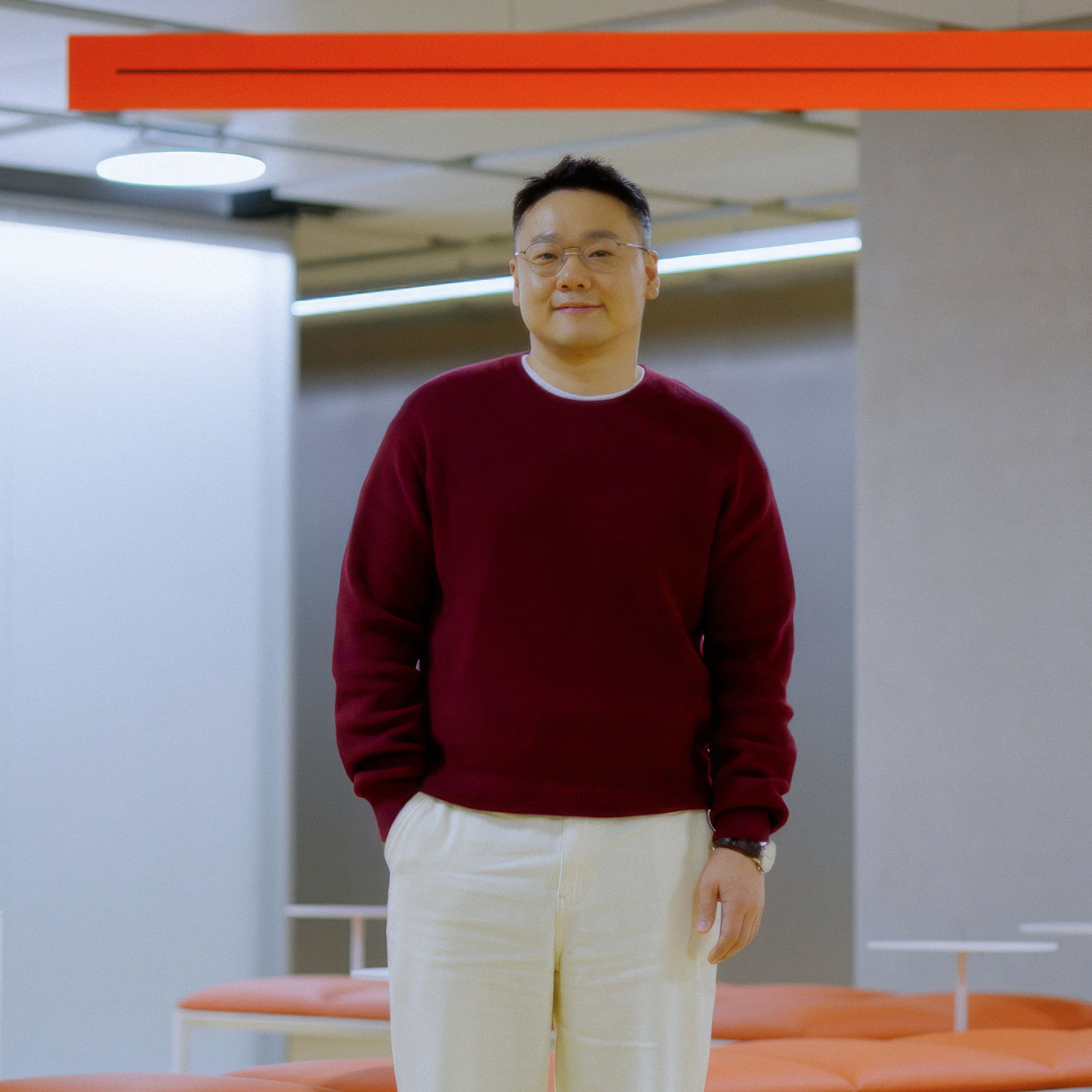
김은진님 이미지1
What made you choose NAVER?

I studied digital colors in graduate school. My research was about developing an algorithm capable of duplicating designers as they edit graphic factors or images when they are working on graphic design with designated key highlight colors or brand colors. In a way, you could say that I studied the methodology of how far computers can imitate or automate the designing process of human designers, rather than studying actual design. I found the process much entertaining, and decided to join NAVER because I thought this was where the newest GUI was being created.

Do you see why designers are categorized under the product planning job group at NAVER?

Instead of performing a specific role, designers at NAVER are responsible for defining a service flow and the entire process that enables the service to be implemented in terms of technology, visuals, and experience. I believe that’s why the work that designers do is grouped under product planning in NAVER.
At first, I thought my role was going to be mostly enhancing user experience by analyzing metrics rather than defining and creating something new because NAVER already has so many popular features. And I thought I was going to be great at it because I had studied analytical methodologies. But it turned out that the roles given to me were much more than that - it went beyond making the existing service better. I had to start everything from a blank slate instead of regarding the existing service as the de facto “correct” answer. I was tasked with designing everything from scratch, by thinking about what kind of usability and social values to incorporate into our service. I believe my role was expanded once more as a product owner when I became part of the main page renewal project, since my role here goes beyond designing user experience flow to develop the entire product cycle and the bigger direction. And it’s not just me; our entire team is challenged with continuously expanding our roles and domains.

Among many different projects you were part of so far, can you tell us about the most memorable one?

The most memorable one is the dictionary service renewal project in Korea. NAVER Dictionary has been part of NAVER services for the longest time, and we found something interesting as we conducted a user survey - the dictionary could also function as the entry point through which users joined NAVER. We found out that once students hit a certain age when they must start studying English or other foreign languages, they start using NAVER Dictionary and create their NAVER account to save vocabulary words. If our dictionary service could leave a first impression of NAVER for some users, we thought we would have to make the service better. Since NAVER Dictionary already had abundant DB and outstanding specifications, the renewal was targeted at enhancing its visual aspects and usability. In terms of visual aspects, we upgraded the UI to make it posher and fun to use. And in terms of usability, we reinforced the search tool to make the search faster and more intuitive, improved the vocabulary feature to make it easier for users to save and memorize vocabulary words, and provided educational content associated with the saved vocabulary words. Because we were bringing about changes that went beyond something visible and because NAVER Dictionary required a lot of in-depth knowledge and know-how, I also remember learning a lot as I collaborated with the relevant people in charge of the service.

“I believe we were able to understand NAVER more in-depth through the process of putting together all services on a single page under the name NAVER.”

Tell us about the PC main page renewal project that the Product Planning Team 1 is working on.

Our team is currently tasked with designing a “comprehensive NAVER experience.” This project aims to provide a seamlessly connected user experience across different devices, such as mobile, watch, and PC. Until now, the main page of NAVER was a page dedicated to displaying everything that the public was curious about in an organized manner. But now, our focus lies on each individual user - displaying a page full of “my” interests, and what “I” am curious about. We are trying to transform NAVER into a platform catering to each individual user, rather than displaying a uniform page for everyone. When users have saved their preferences somewhere on NAVER, such as subscribing to specific media outlets or adding shortcuts to their favorite services, we want those preferences to be incorporated seamlessly regardless of whether users are using NAVER on their smartwatch or mobile device - and this is the kind of user experience that we are currently designing.

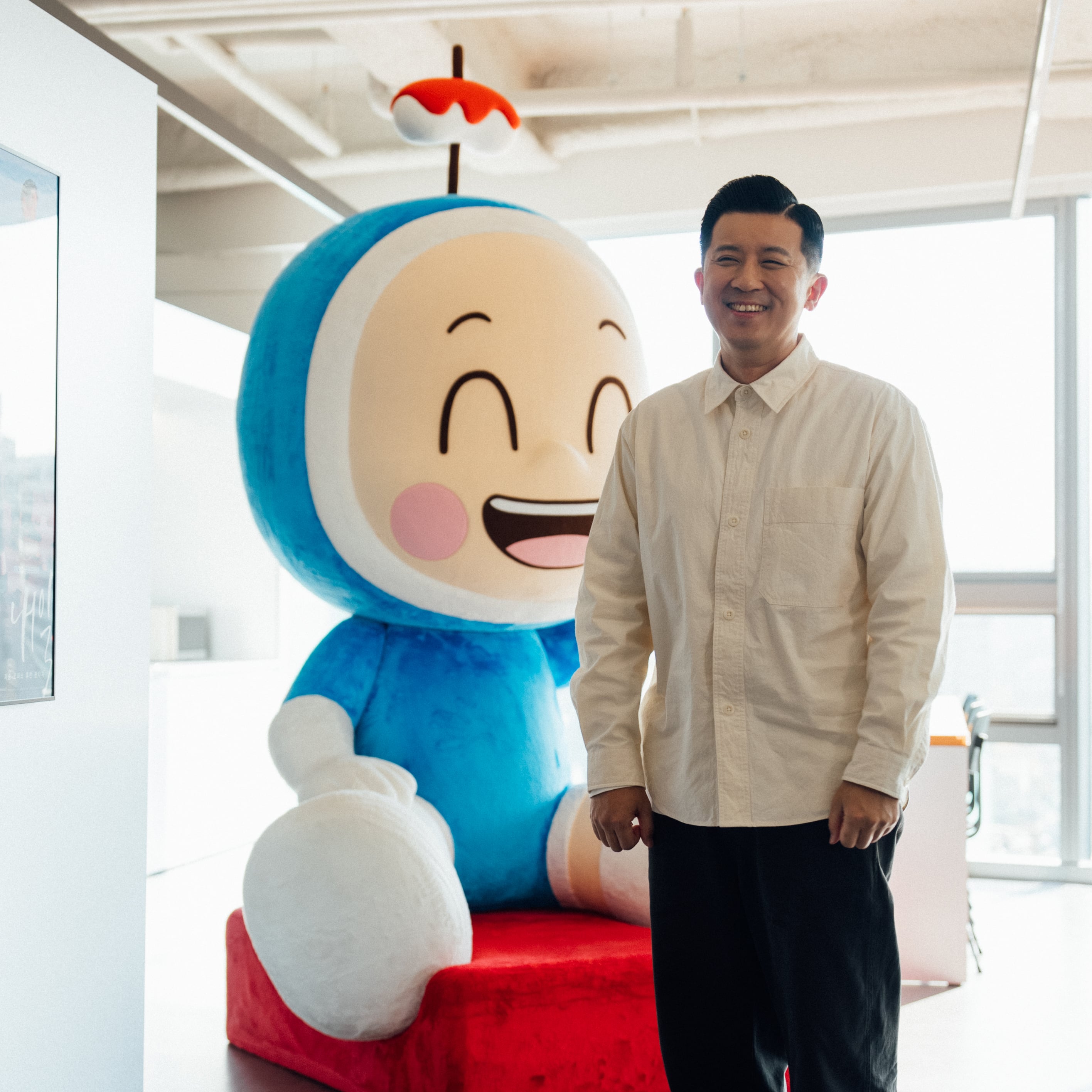
김은진님 이미지2
What do you think the NAVER main page should be aiming for?

When I think of the main page for NAVER, the first image that comes to my mind is “universality.” One might think of something that is extremely trendy and unique, but I think universality should be at the heart of what we do in order to embrace as many users as possible. There is an episode I’d like to share from our recent PC page renewal and the conversation I had with the developers as we were discussing the detailed specifications.
As you know, Internet Explorer has almost discontinued its service. That means it is practically impossible to use some of the most widely-used programming languages for IE, not to mention that less than 30,000 people are using NAVER on IE daily these days. As such, we discussed whether NAVER should stop providing our services for IE as we were preparing for the renewal. After much discussion, the conclusion was that we shouldn’t. Our consensus was that we had to provide options for our users until the very end, and that is why we came up with something called NAVER Light Home. We removed all complex and redundant features like ads and left only the entry points and basic features for key services such as mail. This actually means more work for us. However, we thought it wasn’t right to give up. You even have to have access to your emails to find your password - for someone in those 30,000 users, NAVER could still be an important source. Most of the people I’ve met in NAVER are dedicated to supporting users all the way, even if it means more work and complexity. I believe that mindset is also incorporated into our product as a result.

“We always put a lot of thought into the work we do in order to confidently say that we are, indeed, making a great product.”

What is the most difficult part of your work?

When we have to opt for decisions that were made to bring more value, that can sometimes be contrary to the popular choice. Incorporating such decisions in a convincing manner into the service is always the most difficult part of my work. I’m experiencing similar difficulties with the “recommendation & subscription” project I am currently part of. We are changing the existing page to display only the selected content that has been filtered automatically using algorithms instead of having the editor manually select which content to display. Making the filters less strict and exposing more sensational content might definitely help in terms of user metrics. But the question is, “Does this really add value to our society? Does it help to build a better society and improve awareness?” It is our role to continuously think about the right thresholds and standards and to incorporate them into the logic. Delivering it well to our users and persuading them are always the most difficult tasks. We always put a lot of thought into the work we do in order to confidently say that we are, indeed, making a great product.

Do you have a particular habit or routine that comes with the job?

I have at least three different accounts for each social media like Facebook or Instagram, even though I don’t use all of them frequently. I have different personas for each account, such as an account for following a bunch of other accounts and another account where I would not follow others as much. How each feature is activated is different for users who don’t open the app often and for heavy users. That’s why I have different accounts dedicated to each persona to try out different features and see how they work.

What motivates you to do better?

I would say having regrets. Having regrets about what I could have done better, even when I had done a fantastic job at my work. I believe people who hold this sense of regret always have more potential to do better and grow than those who never look back just because they have done a good job once. It’s one thing to have others tell me that I’ve done a good job and that it’s enough, but I do not think it’s a bad thing to set up my own standards and continue to have that sense of regret. I think that is the motivation that makes me want to get better.

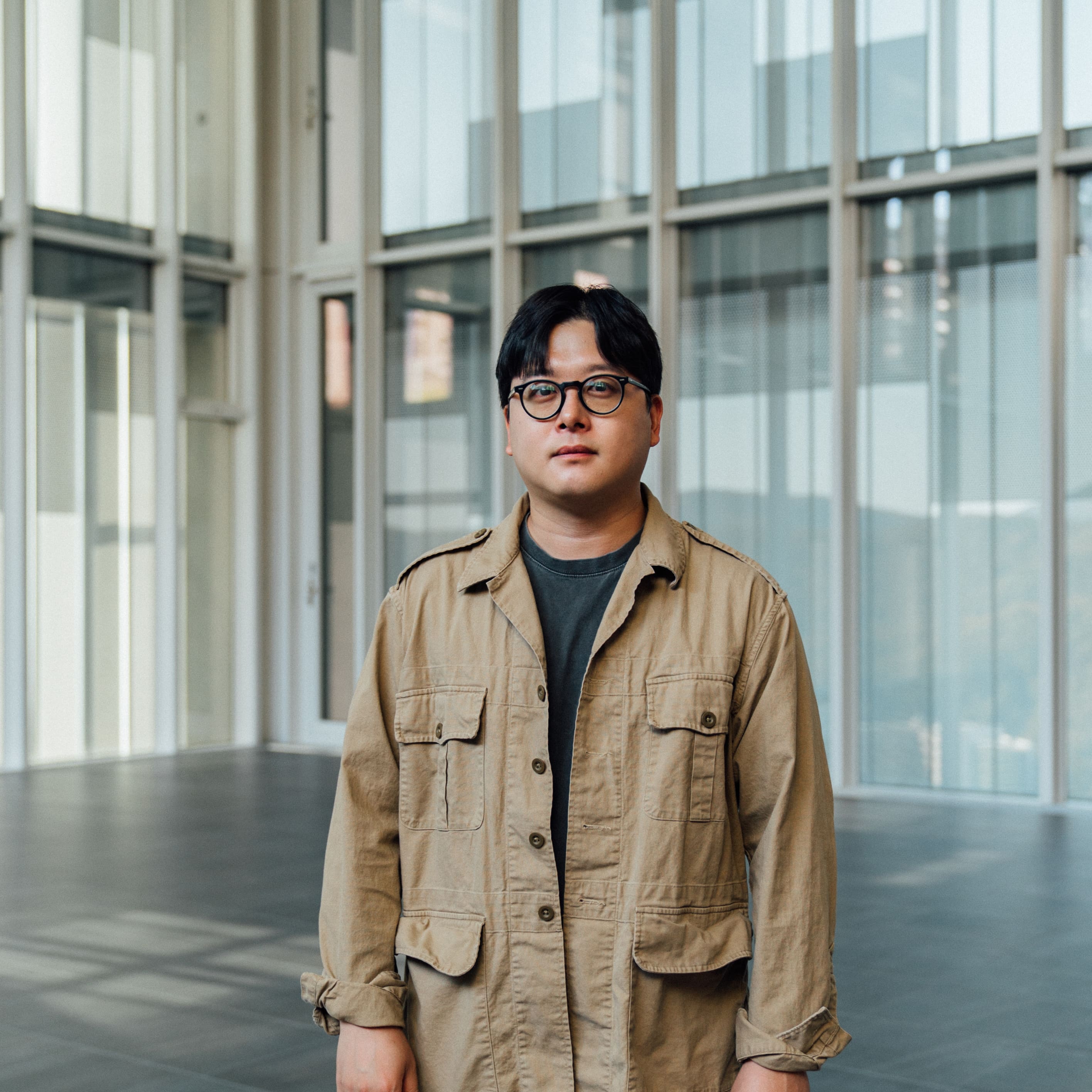
김은진님 이미지3

Published Feb. 2023
Board the Navership

Apply Apply